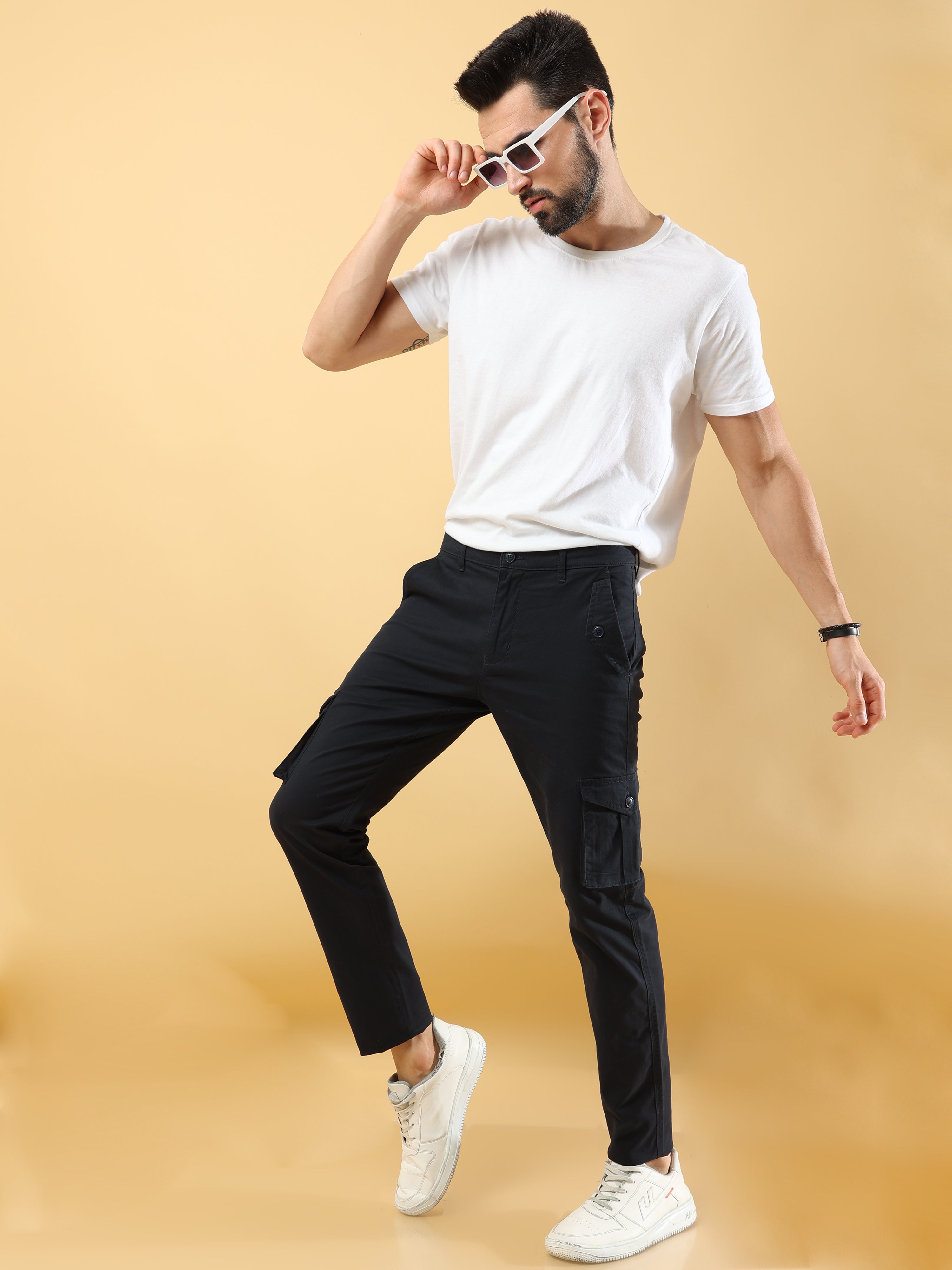
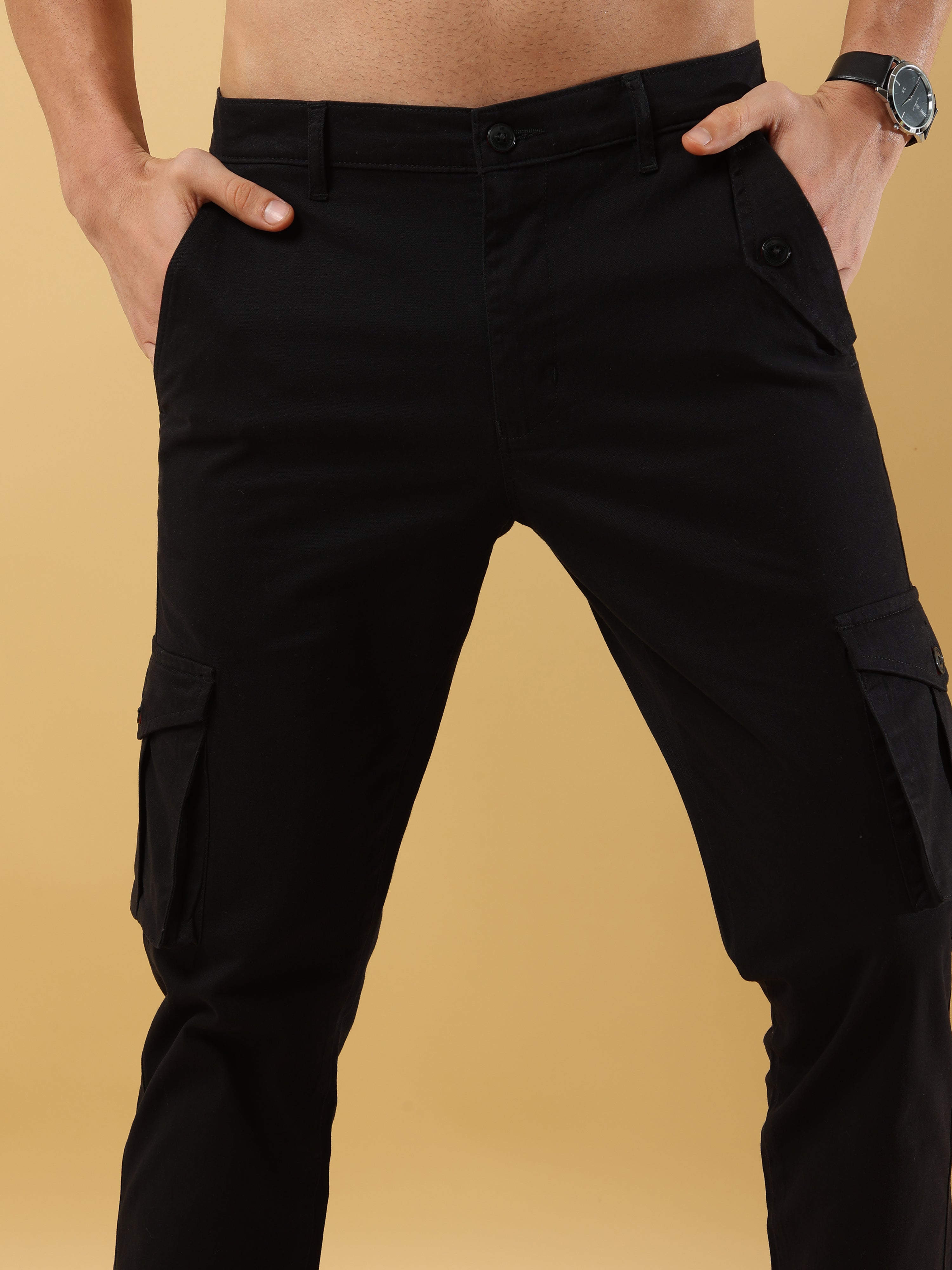
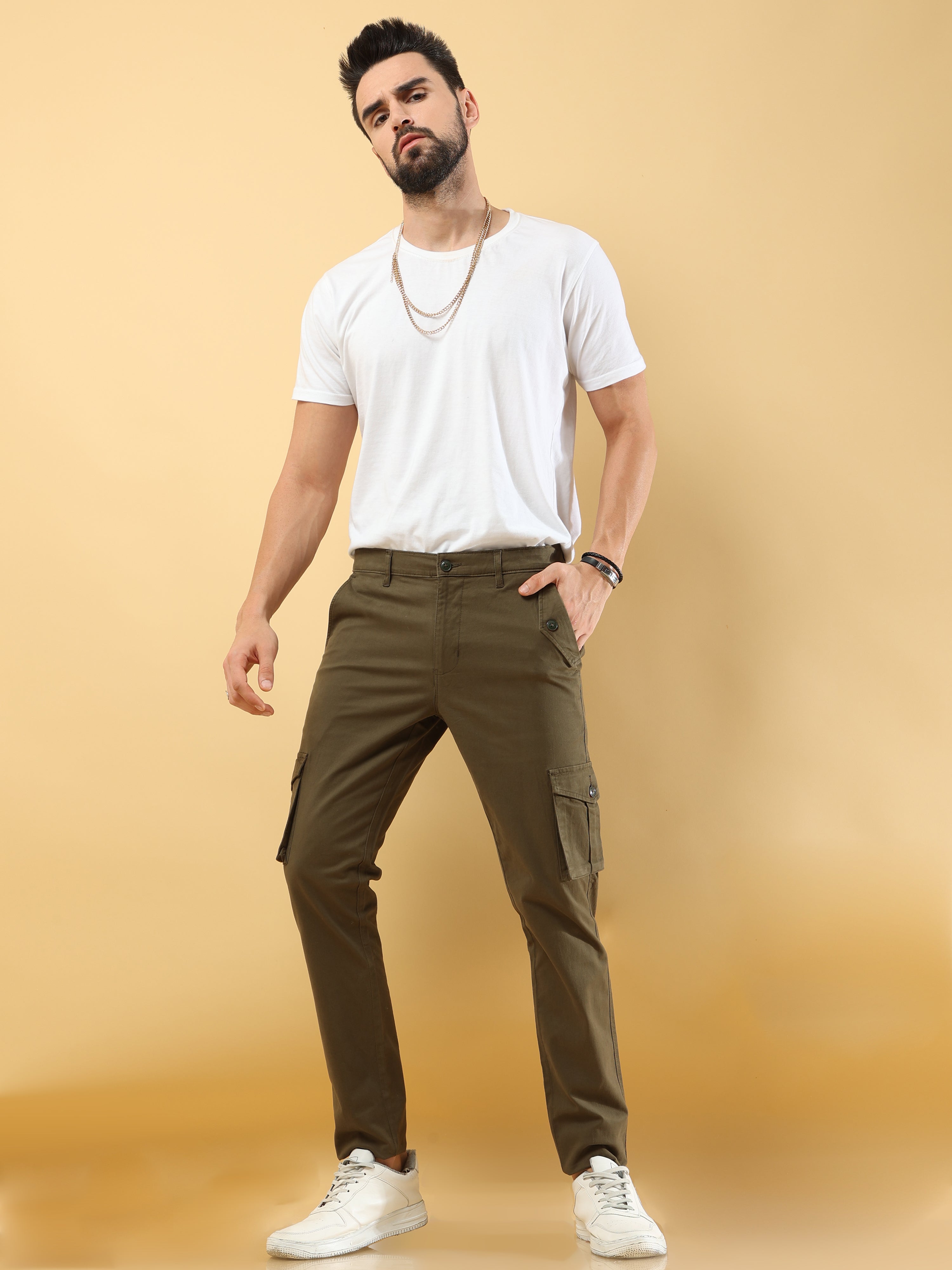
Relaxed fit cargo trousers improve daily wear by introducing measured volume through the seat, thigh, and upper leg while preserving a controlled lower-leg structure. This creates internal movement space without generating unnecessary fabric bulk. Unlike regular fit trousers, which follow a closer leg line, relaxed fit cargo trousers allow the body to move naturally during long periods of sitting, walking, commuting, and repeated posture changes.
The practical difference becomes more noticeable over extended wear hours. A regular fit may appear visually neat at first but can create mild restriction around the thigh and knee during continuous use. Relaxed fit construction solves this by redistributing garment volume into key movement zones while maintaining a straight and stable silhouette.

Fit Logic: The Mechanics of Controlled Volume
Fit performance depends on how fabric responds during body movement. Relaxed fit trousers are engineered so that additional space is introduced only where necessary.
-
Seat Expansion: Extra room in the seat reduces pulling during sitting and rising.
-
Thigh Clearance: Walking becomes smoother because the fabric does not tighten around the upper leg.
-
Leg Consistency: The lower leg remains structured instead of widening excessively, preserving visual balance.
This controlled volume prevents the garment from becoming oversized. The fit remains intentional, where movement improves but the silhouette stays refined enough for daily wear.
Relaxed Fit vs Regular Fit: A Functional Comparison
Regular fit cargo trousers follow a more direct leg line from hip to ankle. This works well for short-duration wear but becomes restrictive during long active routines. As movement increases, fabric tension develops near the knee bend and seat area.
Relaxed fit changes this behavior by allowing the fabric to sit slightly away from the body. This improves airflow, reduces friction, and prevents the repeated need for adjustment during the day.
The distinction is not about loose clothing versus fitted clothing. It is about whether the garment can preserve comfort without losing visual structure.
Why Relaxed Fit Performs Better During Long Wear
Over long workdays, trousers experience repeated stress at movement points. Sitting for hours, climbing stairs, driving, or walking long distances all test how the fit behaves.
Relaxed fit cargo trousers perform better because the extra room reduces seam pressure and lowers the chance of fabric distortion around stress zones. This also helps the trouser maintain its original line after repeated wear cycles.
A fit that constantly pulls or tightens often leads to quicker visual fatigue in the garment. Relaxed fit reduces that effect.
Fit Philosophy at Italian Colony
At Italian Colony, relaxed fit cargo trousers are developed to balance comfort with menswear discipline. The goal is not oversized volume, but measured ease that improves practical wearability.
Each fit is designed so that added room supports daily motion while preserving a clean lower-leg fall. Pocket placement, waistband balance, and fabric selection all contribute to ensuring that relaxed fit remains visually controlled.
Frequently Asked Questions
Is relaxed fit better for long daily wear?
Yes, because movement zones receive additional allowance where the body needs flexibility most.
Does relaxed fit look oversized?
No, when the lower leg remains structured and the volume is controlled.
Is regular fit less comfortable?
For extended daily wear, regular fit may create more restriction than relaxed fit